


The collapse of Keridwyn shattered economies across the realm — but for some, instability was simply another kind of opportunity.
Tordab emerged from the chaos that followed the alliance’s downfall. To outsiders, it is less a true city and more a gathering place for smugglers, mercenaries, assassins, and opportunists rejected by polite society. Rumors persist that the infamous Night Wraiths now operate their headquarters somewhere within its twisting streets and flooded tunnels.
Unlike Crossroads, whose commerce still maintains some illusion of structure, Tordab embraces disorder openly. Alliances form and dissolve overnight. Friendships last only as long as they remain profitable. Rival gangs, merchant crews, criminal syndicates, and wandering specialists constantly reshape the city’s social landscape.
The settlement itself survives through necessity. Tordab lacks meaningful natural resources and must import nearly all essential supplies. In return, it exports what other cities forbid: illegal alchemy, cursed relics, contraband weaponry, forbidden creatures, black market enchantments, and information better left hidden.
No official laws govern the city. Instead, survival depends on reputation, intimidation, and retaliation. Offenses are answered personally, not institutionally. The unpredictable and excessively violent rarely survive long, removed either by rivals or by the practical self-interest of neighboring factions.
At the center of the city lie the ruins of an abandoned temple once dedicated to Laranis, god of light, fire, and protection. Long ago the temple was established to suppress the necrotic horrors and rampant swamp growth consuming the region.
Beneath the shattered stone structure stretches a network of flooded tunnels and collapsed sanctuaries. Local stories speak of an impossible flame deep below the ruins — a burning sphere of fire that refuses to extinguish despite resting beneath freezing black water.
Tordab divides naturally into two distinct halves. Toward the marsh plains spreads the “dry side,” where districts expand in careful circles and commerce flows openly. Into the swamp forests sprawls the “wet side,” an ever-changing maze where pathways vanish beneath floodwaters and buildings are slowly reclaimed by nature.
Guides are essential within the wet side, even for longtime residents. Necrotic Dragons, Seadragon Flora, and Rettocuru navigate the shifting waterways better than maps ever could, making them some of the city’s most valuable inhabitants.
Tordab’s military is not truly an army at all. It is a coalition of armed merchants, smugglers, beast handlers, and opportunists defending their profits. They wage war not for honor or patriotism, but because instability generates demand — and demand generates wealth.
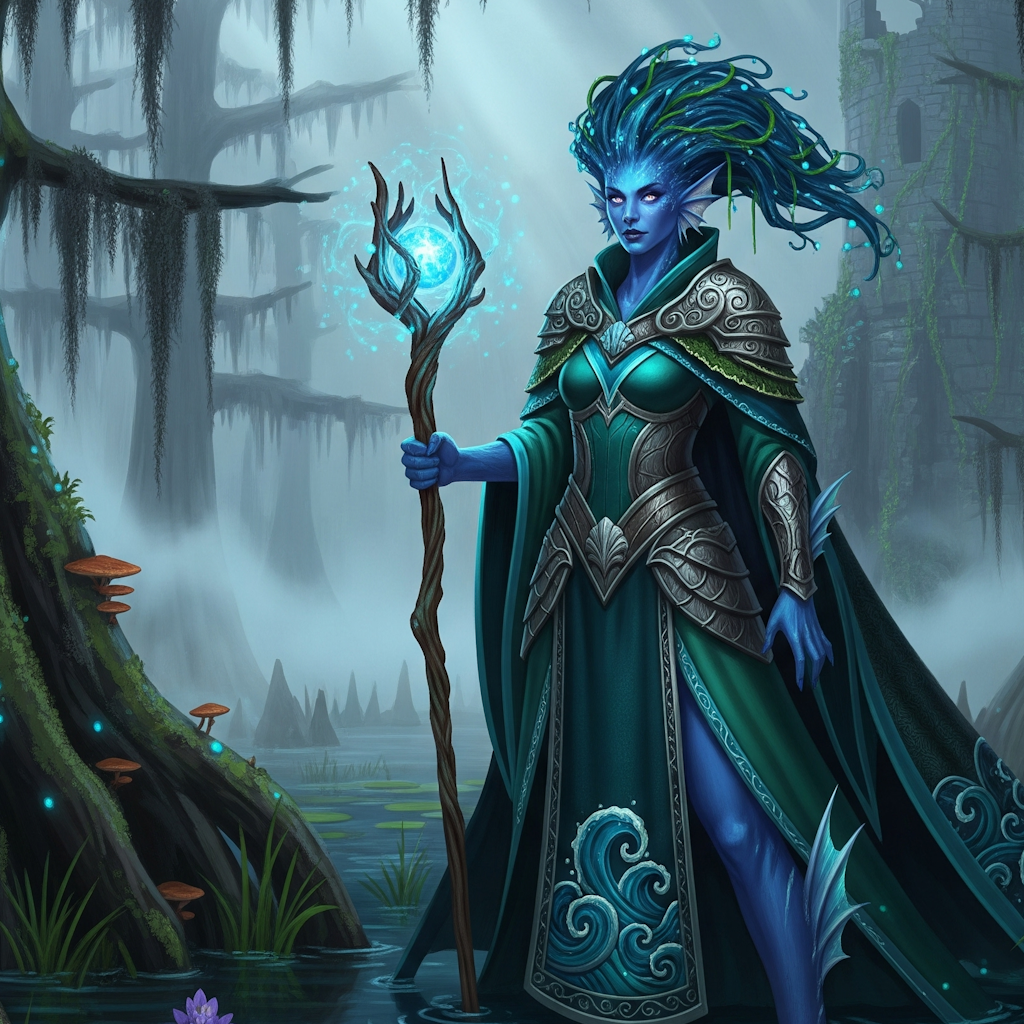
Among the Materia, magical talent is expected from birth. Izi possessed almost none. Even the simplest spells exhausted her, making her an object of disappointment and ridicule throughout her early life.
Rather than accept weakness, she devoted herself obsessively to improvement. Rage, frustration, and desperation became fuel for relentless training. She sacrificed comfort, time, and nearly every relationship in pursuit of magical mastery.
Symtar became both her prison and proving ground. She manipulated, bribed, and fought her way repeatedly into the tower’s challenges, forcing herself through trial after trial until her casting speed surpassed nearly everyone around her.
Years of hardship transformed her into one of the fastest spellcasters in the realm — not through innate talent, but through sheer refusal to fail. Most who witness her abilities assume her skill came naturally. Few understand the suffering behind it.
Her cold personality and intimidating demeanor kept others distant, but Yuyizi recognized her determination immediately and recruited her into Symtar’s criminal underground as both transporter and enforcer.
Eventually Keridwyn abandoned the region, Yuyizi departed for the World Tree, and Izi found herself untethered. Gathering merchants, smugglers, and survivors around her, she established a new home within the abandoned swamp temple that would become Tordab.
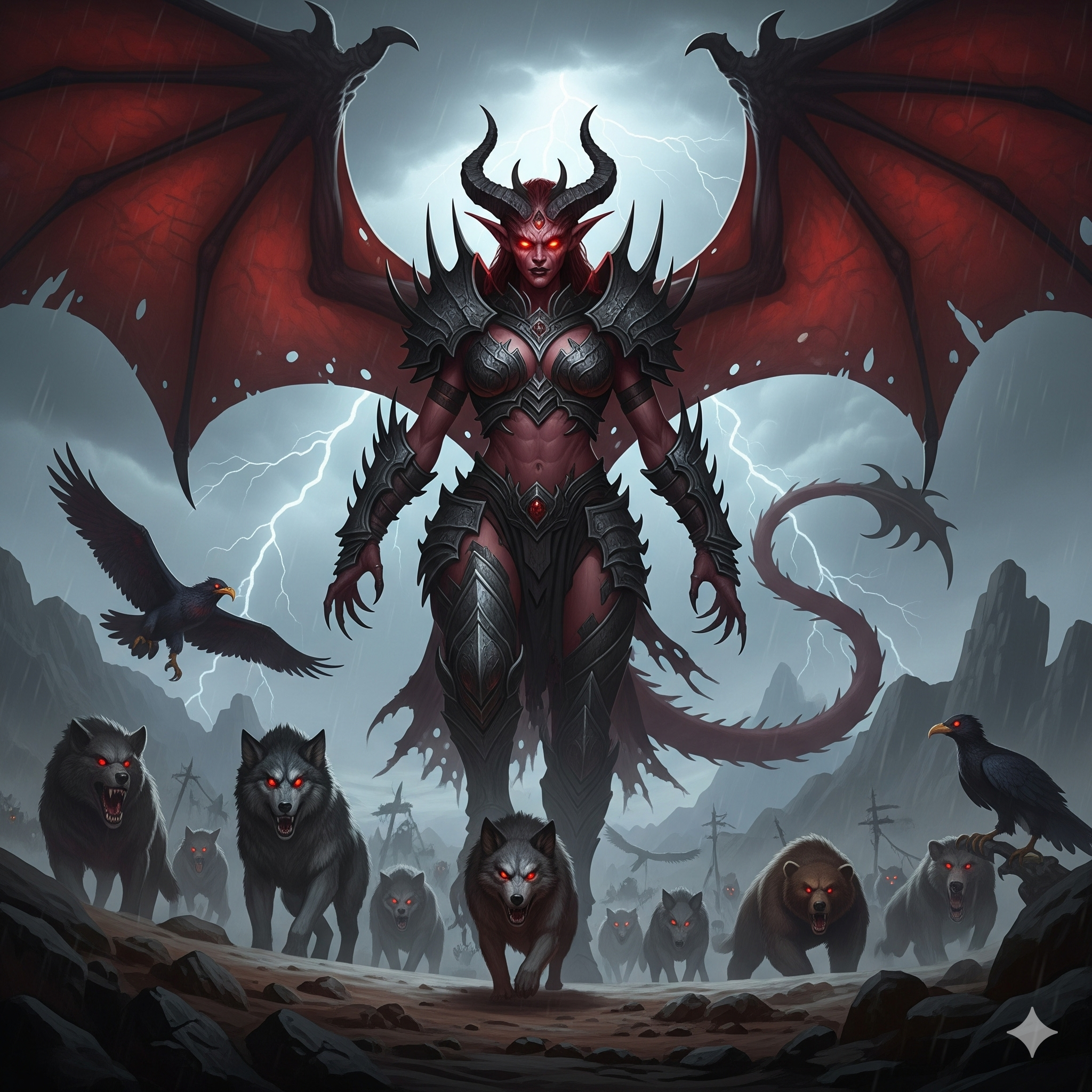
Dorgul towers above most mortals both physically and psychologically. Massive even for a Demon, she moves with predatory silence and impossible precision through the swamps and marshlands surrounding Tordab.
She is a beast master unlike the sentimental trainers found elsewhere in the realm. Loyalty means nothing to her. Control, fear, instinct, and dominance are the tools she respects.
Dorgul captures, breeds, and sells creatures of every imaginable kind — exotic predators, battlefield monsters, magical aberrations, and creatures so dangerous most cities would exterminate them on sight. For the right price, she will acquire nearly anything alive.
Before settling in Tordab, she operated among the islands near Orbin, supplying rare animals to wealthy collectors and thrill-seekers. Since the collapse of the alliance, however, warfare has become her most profitable market.
Entire factions now purchase beasts from her as living weapons. She profits from raids, border conflicts, blood sports, and military escalation alike, viewing conflict simply as another ecosystem to exploit.
Though she defends Tordab fiercely, it is not out of patriotism. The city protects her trade routes, her hunting grounds, and her income. If citizens die protecting those interests, she considers it an acceptable cost.


